
How to Prepare for a Job Interview: A Step-by-Step Guide
BY: DA PUBLISHED: 2026-11-28 14:45:38 | UPDATED: 2026-11-28 14:19:11 | Views: 73
Learn how to prepare for a job interview step by step: research the role, practise answers, plan your day and follow up politely, with a safety checklist.
A job interview can feel stressful, even when you are well qualified. The good news is that most of the work happens before you walk into the room or join the call. With a clear plan, you can turn nerves into calm confidence.
This guide shows you how to prepare for a job interview in simple steps. It works for in-person, phone and video interviews, and for first jobs as well as career changes.
Key takeaways
- Start preparing at least a few days ahead, not the night before.
- Research the organisation and read the job description line by line.
- Practise short, clear answers using real examples from your own experience.
- Plan travel, technology and outfit in advance to avoid last-minute stress.
- Check that the interview is genuine and never pay a fee to get a job.
- Send a short thank-you message afterwards.
Step 1: Understand the role and the organisation
Begin with the job description. Highlight the main duties, the skills requested and any tools or software mentioned. These are the topics the interviewer is most likely to ask about.
Next, learn about the organisation. Visit its website and official social pages. Look for what it does, who it serves, and how it describes its values and work.
Write down three things you learned and one question you would like to ask. This shows genuine interest and helps you speak naturally.
Quick research checklist
- What does the organisation do, and for whom?
- What would your daily tasks look like in this role?
- Which skills in the job description match your own?
- Which skills are you still developing, and how are you learning them?
Step 2: Match your experience to the job
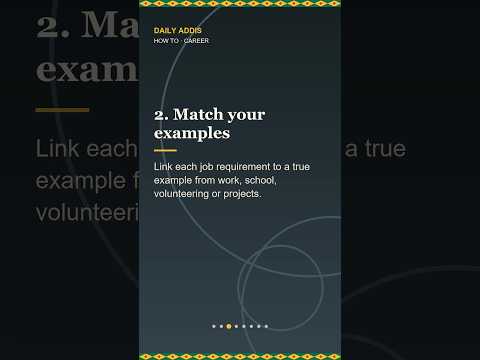
Make a simple two-column list. On the left, write the requirements from the job description. On the right, write a real example from your work, studies, volunteering or projects that fits each one.
Examples do not need to be impressive. A group school project, a family business task or a community event you helped organise can all show useful skills such as teamwork, reliability and problem solving.
Only use examples that are true. Interviewers often ask follow-up questions, and honest answers are easier to explain.
Step 3: Practise common questions
Many interviews include a familiar set of questions. Practise answering them out loud, because speaking is different from thinking. Try it alone, in front of a mirror, or with a trusted friend.
| Common question | What the interviewer wants to know | How to approach it |
|---|---|---|
| Tell me about yourself | Your background and fit for the role | Give a 1-minute summary: present, past, and why you want this job |
| Why do you want this job? | Your motivation and research | Connect the role to your skills and interests |
| What are your strengths? | Skills relevant to the work | Choose two, each with a short example |
| What is a weakness? | Self-awareness and willingness to learn | Name a real area you are improving and what you are doing about it |
| Tell me about a challenge you handled | Problem solving and attitude | Use the structure below |
A simple answer structure
For experience-based questions, try four short parts: the situation, your task, the action you took, and the result. Keep each part to one or two sentences. This keeps your answer clear and focused.
Step 4: Plan the practical details
Good logistics protect your confidence. Handle them a day or two before the interview.
Video 1 of 1
- Confirm the details. Check the date, time, place or video link, and the name of the person you will meet.
- Plan your route. For in-person interviews, check how long the trip takes and leave extra time for traffic. Aim to arrive about 10 to 15 minutes early.
- Prepare your documents. Bring clean copies of your CV, a notebook and a pen. Bring certificates or a portfolio only if they are relevant.
- Choose your outfit. Pick clean, comfortable, neat clothes that suit the workplace. Try them on in advance.
- Test your technology. For video or phone interviews, charge your device, check the internet, and test your camera and microphone. Choose a quiet spot with a simple background and good light.
Step 5: Stay calm and communicate well on the day
On the day, eat something light and drink water. Review your notes briefly, then stop. Last-minute cramming can increase stress.
Greet everyone politely and listen carefully to each question. It is perfectly fine to take a moment before answering. If you do not understand a question, ask for it to be repeated or explained.
Speak at a steady pace, keep your answers focused, and be positive when talking about past jobs or teachers. Avoid criticising anyone.
At the end, ask your prepared question. Good examples include what a successful first three months looks like, how the team works together, or what the next steps in the process are.
Step 6: Follow up and stay safe
Within a day, send a short thank-you message by email. Thank the interviewer for their time, mention one thing you enjoyed learning, and restate your interest in the role. Keep it brief and polite.
If the interviewer gave a decision date, wait until then. If you have not heard back, one friendly follow-up message is reasonable.
Safety notes for job seekers
- Verify the employer. Look for an official website, a business email address and consistent contact details.
- Never pay to get a job. Genuine employers do not ask for application, interview or "training" fees.
- Protect your personal information. Share your CV and contact details, but be cautious about sharing bank details, passwords or copies of identity documents before a confirmed offer.
- Choose safe meeting places. Interviews should take place at a professional workplace or a trusted public setting, or through a known video platform. Tell a friend or family member where you are going.
- Trust your instincts. If something feels wrong, you can politely leave or end the call.
This article offers general guidance only and is not professional career, legal or financial advice.
Frequently Asked Questions
How early should I start preparing for an interview?
Ideally, start as soon as you receive the invitation. Two to three days gives you time to research, practise out loud and sort out travel or technology. If the interview is at short notice, focus on the job description, two or three strong examples and your logistics.
What should I do if I do not know the answer to a question?
Stay calm and be honest. You can take a short pause, then explain how you would approach the problem or what you would do to learn it. Honesty and a willingness to learn are valued more than guessing.
How long should my answers be?
Aim for roughly one to two minutes for most questions. Give a clear point, one example and a short conclusion. If the interviewer wants more detail, they will ask.
Is it okay to bring notes to an interview?
Yes, in most cases. A small notebook with your questions and key points is fine, especially if you use it sparingly. Do not read your answers word for word. Keep eye contact and speak naturally.
Preparing for an interview is a skill that improves with practice. Research the role, rehearse real examples, plan the details and stay safe. Each interview, whatever the outcome, helps you grow more confident for the next one.
You May Also Like
Latest Videos
Stop Buying Apartments Blindly: 3 Hidden...
Jul 08, 2026Super Girl Movie 2026 is finally here!
Jul 05, 2026Ethiopian Kitfo
Jul 05, 2026Related Articles
How to Remove Stains from Clothes: Simpl...
1 week ago
How to Write a CV: A Simple Step-by-Step...
3 weeks ago